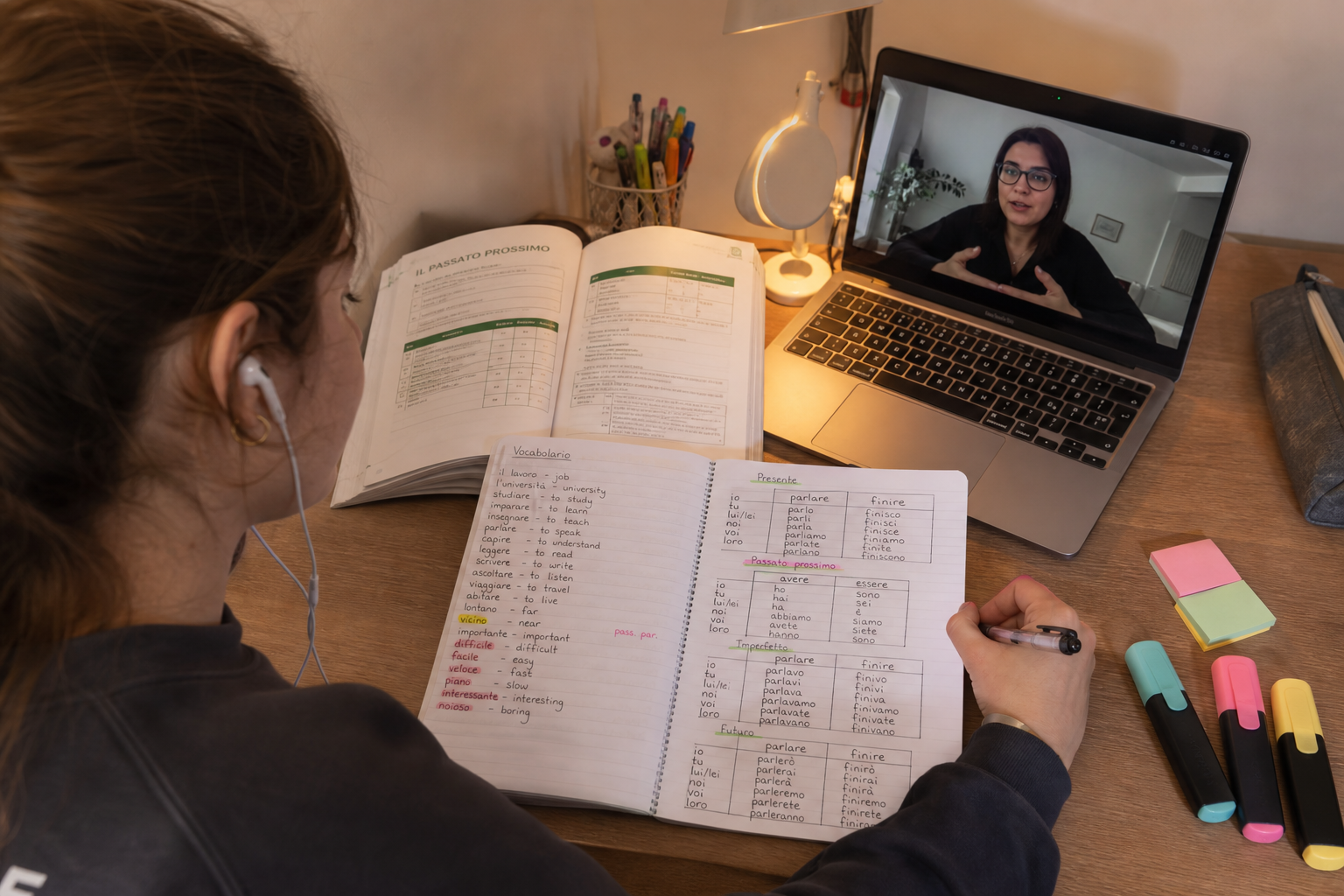
I want to be honest about my starting point here: I am, at this moment, an intermediate Italian speaker who makes frequent errors, understands spoken Italian better than I can produce it, and can have a real (if laboured) conversation with a patient Italian person. After three years. That's probably not as fast as most language learning content would have you believe is possible, and I suspect it's more representative of reality than the "conversational in 3 months" claims you see everywhere.
I've used almost every major method at some point in those three years: Duolingo, Babbel, italki (online tutors), grammar books, Anki (flashcards), language exchange partners, time in Italy, and passive immersion through Italian TV and podcasts. Each of them did something useful. None of them was sufficient on its own. The question is how to combine them effectively.
The Methods Compared
| Method | Cost | Time required | What it's good for | Limitations |
|---|---|---|---|---|
| Duolingo | Free / £6.99/month | 10–30 min/day | Habit building, basic vocab, gamification | Very poor for grammar; doesn't produce fluency |
| Babbel | £6–10/month | 15–30 min/day | Structured learning, better grammar than Duo | Slower progress; less engaging |
| italki (online tutors) | £8–25/hour | 1–2 hr sessions | Speaking practice, real grammar correction | Cost; requires preparation to use effectively |
| Grammar books (e.g. Hugo, Collins) | £12–20 one-off | Self-paced | Structural understanding of the language | Dry; doesn't build speaking confidence |
| Anki / spaced repetition | Free | 15–20 min/day | Vocabulary retention; excellent long-term | Setup time; boring; not for grammar |
| Language exchange (Tandem, HelloTalk) | Free | Variable | Speaking practice, cultural context | Quality varies; requires finding good partner |
| Immersion (TV, podcasts, books) | Free–Low | Variable (passive) | Listening comprehension, natural speech patterns | Ineffective at beginner level; needs foundation first |
What I Actually Found Worked
The thing Duolingo is actually good for
Duolingo is genuinely good at one thing: habit formation. The streak system and gamification make it easy to spend 10 minutes a day without breaking the habit, which for language learning (a long-horizon project) is actually valuable. The problem is that people use Duolingo as their primary learning tool and expect it to produce conversational ability. It doesn't and can't.
At beginner level, Duolingo is fine for getting started and learning some basic vocabulary. Beyond that, it needs to be paired with something that actually teaches grammar, because the "learn by exposure" approach that Duolingo uses doesn't give you a structural understanding of how the language works – and without that, your progress hits a wall somewhere in the intermediate stage.
The thing that made the biggest difference
Online tutors via italki. The gap between doing exercises alone and having a real conversation with someone who corrects your mistakes in real time is very large. I resisted this for too long because the hourly cost felt expensive. Looking back, two tutoring sessions per month (roughly £25–40 depending on the tutor) would have accelerated my progress significantly if I'd started earlier.
The key is choosing a "community tutor" (a native speaker rather than a qualified teacher) for conversation practice – they're cheaper and more effective for speaking confidence – and a qualified teacher for structured grammar work when needed. Mixing the two is what works.
Immersion: when it works and when it doesn't
Passive immersion through TV and podcasts is basically useless at beginner level – you're not yet able to pick anything useful from the stream of sound. At intermediate level it becomes very useful. Italian TV on Netflix (Italian audio with Italian subtitles, not English) has been one of the most effective tools for my listening comprehension in the past year, but only because I already had enough foundation to follow rough meaning and use context.
A practical ladder: Beginner podcasts designed for learners (Coffee Break Italian, Italiano per Stranieri) bridge this gap between "can't understand anything" and "can follow along if it's designed for me."
A Realistic Timeline
The Foreign Service Institute, which trains US diplomats in foreign languages, estimates that Italian requires roughly 600–750 hours to reach professional working proficiency for an English speaker. That's roughly two hours per day for a year, or one hour per day for two years, to reach a functional but still-imperfect level.
I spent considerably less than that per day on average. Three years of variable effort – sometimes consistent, sometimes not – has produced an intermediate level. That feels about right.
The point isn't to be discouraging; it's to reframe expectations. Learning a language to a genuinely useful level takes hundreds of hours over years. Apps make it more accessible and more consistent, which is real progress. But they haven't fundamentally changed the time requirement – they've just made it easier to accumulate that time in small chunks.
If you're starting out
Start with Duolingo or Babbel for habit and basics (free, low commitment). Add a simple grammar book after two months when you hit the wall of not understanding why things work the way they do. Start italki conversation sessions at the three-month mark, even if your speaking feels terrible – it's supposed to feel terrible at that point. Add Anki for vocabulary once you have a foundation. Passive immersion when you reach intermediate. That sequence works.