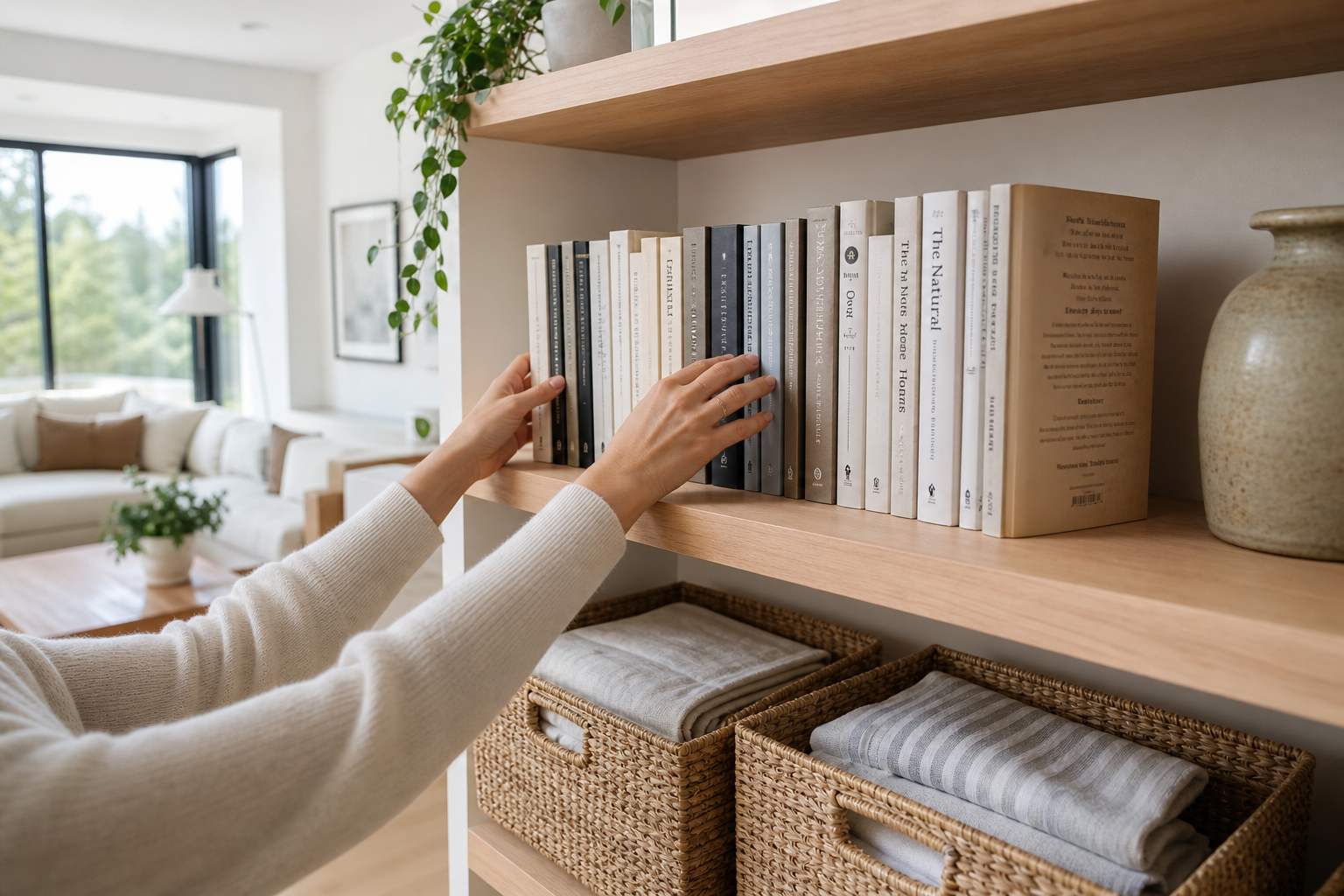
The word "decluttering" has been somewhat ruined by the wellness industry. It now carries associations with white walls and capsule wardrobes and the idea that owning fewer things makes you a more enlightened person. Which is, let's be honest, mostly nonsense.
The practical case for getting rid of stuff you don't use is much simpler: it reduces the number of decisions you make each day, makes cleaning easier, and removes the low-level background stress of living surrounded by things that need attention, maintenance, or just moving out of the way. That's it. That's the argument.
So this isn't a guide to becoming a minimalist. It's a guide to reducing the amount of friction your possessions create in your daily life. Those are different projects.
Why Most Decluttering Fails
Most people who try to declutter do one of two things. They either do a massive single-day purge that feels great but creates decision fatigue halfway through, resulting in large piles of "maybe" items that end up back in the cupboard. Or they read about a method – KonMari, the four-box method, the Swedish death cleaning approach – get excited, and then never actually start.
The real barrier isn't knowing what to do. It's the mental weight of making individual decisions about individual objects. That weight is finite; once you've exhausted it, everything looks like a "keep."
The solution is to work in very short sessions – 20 to 30 minutes maximum – and to focus on one specific area or category, not a whole room. The bedroom wardrobe is not one task. The top shelf of the bedroom wardrobe is one task.
The Room-by-Room Approach
Kitchen
Kitchens accumulate things relentlessly. The categories to focus on:
- Duplicates. Most people have at least one extra set of something – a second set of mixing bowls, two identical spatulas, three vegetable peelers. Keep the best one.
- Single-purpose gadgets. The strawberry huller, the mango splitter, the quesadilla maker. These are usually fine to go unless you use them at least monthly.
- Mugs and glasses. Aim for roughly 1.5x the number you'd need if everyone in your household had a mug at once. More than that and you're just storing them.
- Expired and unused pantry items. Check dates. Throw away anything you haven't touched in 18 months unless it's a genuine long-term staple.
Bedroom and wardrobe
The honest approach to clothes: turn all your hangers backwards. For the next three months, when you wear something, turn its hanger the right way. After three months, anything still backwards is a candidate for removing.
This isn't perfect – it won't catch seasonal items you haven't needed yet – but it does remove the self-deception of "I might wear this." It replaces opinion with data.
The home office / junk drawer zone
Every home has one. Usually multiple. The principle here is: if you don't know what something is for, it's gone. If you know what it's for but haven't needed it in two years, it's probably gone. The exception is genuine safety or legal documentation, spare keys, and anything you'd need in an emergency.
The "One Year Box" Method
For things you're genuinely unsure about – things that aren't obviously rubbish but that you haven't used recently – put them in a box with today's date written on the outside. Store the box somewhere out of the way. If you haven't opened the box to retrieve anything in 12 months, donate or dispose of the contents without opening it. You'll have proved to yourself that you don't need them.
This removes the anxiety of "but what if I need this later" because you've given yourself a sensible window without committing to a permanent decision immediately.
What Not To Do
Don't do a huge room all at once. Don't start with sentimental items – they're the hardest and will derail the whole process. Don't get distracted by organising things you've already decided to keep (that's a separate job). And don't buy storage solutions first. Storage solutions are for after you've got rid of things, not before.
One rule that actually helps: For every new item that comes into your home, one similar item goes out. This isn't perfectionism – it's just preventing accumulation from happening faster than you can manage it.
Realistic Expectations
A typical home probably has several hundred objects that could go without any meaningful impact on daily life. Getting rid of all of them is unlikely to happen in one go, and that's fine. Even removing 20% of what you don't use tends to make a noticeable difference to how a space feels and functions.
The goal is not an empty house. The goal is a house where everything in it either gets used or genuinely makes you happy, and where finding, cleaning, and maintaining your possessions takes less of your time and attention. That's an achievable, practical objective – and it doesn't require buying into any particular aesthetic or philosophy to get there.