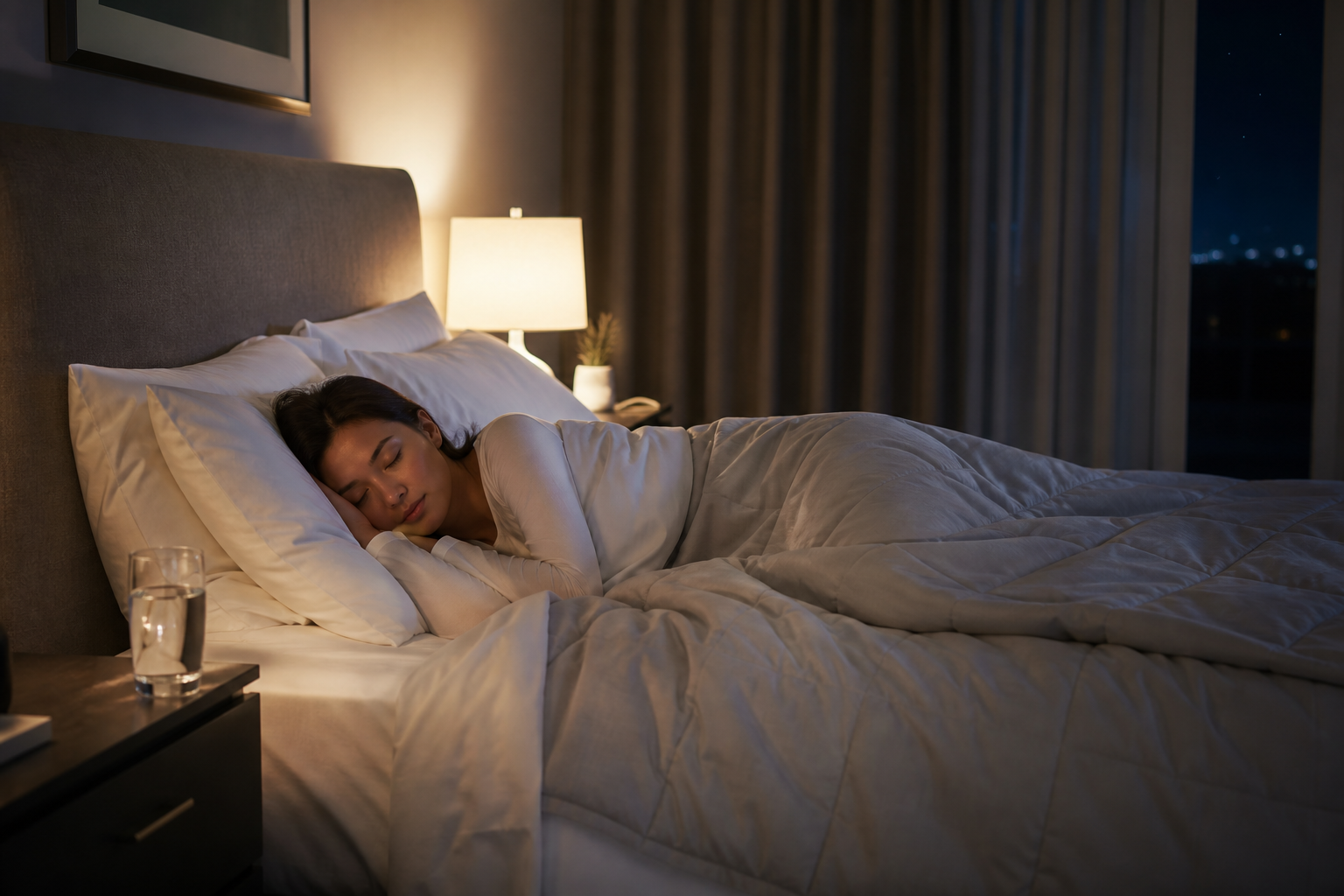
I spent about two years being quite bad at sleeping. Not dramatically – I wasn't lying awake until 3am every night – but consistently getting to bed too late, lying there scrolling for longer than I intended, waking up feeling like I'd had four hours less than I actually had. The usual.
I tried most of the things you've probably heard of: magnesium supplements, sleep tracking apps, expensive pillows, various herbal teas. Some of them did absolutely nothing. A couple made a genuine difference. The gap between the two groups is more predictable than the wellness industry would like you to believe.
What Sleep Science Actually Tells Us
Sleep science has accumulated a reasonably consistent body of findings over the past few decades. Several principles appear regularly across the literature:
Sleep pressure and circadian rhythm are the two forces that govern your sleep. Sleep pressure is basically how long you've been awake – it builds throughout the day and is what makes you feel sleepy at night. Circadian rhythm is your body clock, which regulates when you feel alert versus tired on a roughly 24-hour cycle. Almost everything about improving sleep comes down to working with these two systems, not fighting them.
Consistency matters more than total hours. Varying your sleep schedule dramatically – going to bed at 11pm on weekdays and 2am on weekends, for example – disrupts your circadian rhythm. Irregular sleep timing is broadly linked in the literature with worse sleep quality and daytime function, even when total sleep time is technically adequate.
Temperature and light are the main external regulators of circadian rhythm. Light, particularly blue-wavelength light, suppresses melatonin production and signals to your brain that it's daytime. Cooler temperatures signal nighttime. This is why phone use before bed is genuinely problematic – it's not just about stimulation, it's about the light itself.
The Sleep Hygiene List, Ranked by Actual Impact
| Intervention | Evidence Quality | Practical Impact | Cost |
|---|---|---|---|
| Consistent wake time every day | Very strong | High | Free |
| Cool bedroom (16–18°C) | Strong | High | Free / low |
| Dark room (blackout curtains or mask) | Strong | Medium–High | Low (£10–30) |
| No screens 60 min before bed | Strong | Medium–High | Free |
| Avoiding caffeine after 2pm | Strong | Medium (highly variable) | Free |
| Magnesium glycinate | Moderate | Low–Medium | Low–Medium |
| Melatonin supplements | Moderate (for timing) | Low–Medium | Low |
| White noise / earplugs | Moderate | Variable | Low |
| Expensive mattresses | Weak | Low (mostly comfort) | Very high |
| Sleep tracking apps | Weak for improvement | Neutral to negative | Low–Medium |
Evidence quality ratings reflect our editorial assessment of the general academic literature and are indicative only. Individual results vary. Not medical advice.
That last point about sleep trackers deserves a mention. There's actually a recognised pattern called "orthosomnia" – anxiety about sleep quality driven by sleep tracking data – where people sleep worse precisely because they're paying too much attention to their metrics. If you find your tracker is making you anxious rather than helping, it's probably worth ditching it.
The Caffeine Thing
Caffeine's half-life in the body is roughly 5–6 hours for most people, but can range from 2 hours to over 10 hours depending on genetics, liver function, and a few other factors. "Avoid caffeine after 2pm" is a reasonable general guideline, but it's entirely possible you're not particularly caffeine-sensitive and it genuinely doesn't affect you, or that you metabolise it unusually slowly and even your morning coffee is affecting your sleep.
If your sleep is problematic, trying a two-week caffeine cutoff at noon is a cheap and easy experiment. If nothing changes, caffeine probably isn't your issue.
What Actually Changed Things For Me
The two things that made a genuine, lasting difference were both free. First, a strict wake time – same time every day, alarm, no snoozing, even at weekends. This was uncomfortable for the first two weeks and then became remarkably easy. The quality of my sleep improved noticeably, I think primarily because I stopped having variable bedtimes as a knock-on effect.
Second, and I genuinely didn't expect this to work, putting my phone in the kitchen at night rather than by my bed. Not because I consciously stopped scrolling (though that helped) but because the habit of reaching for my phone first thing in the morning – which was flooding my brain with light and information at the worst possible time – completely disappeared. Those first 10–15 minutes of daylight and quiet before reaching for any device turned out to matter a lot.
The short version
Fix your wake time first, then address your bedroom environment (dark, cool), then think about screens. These three things together will outperform almost any supplement or gadget. Once you've done them, if you still have sleep problems, that's worth discussing with a GP – some sleep issues genuinely need clinical attention that a mattress or an app can't provide.