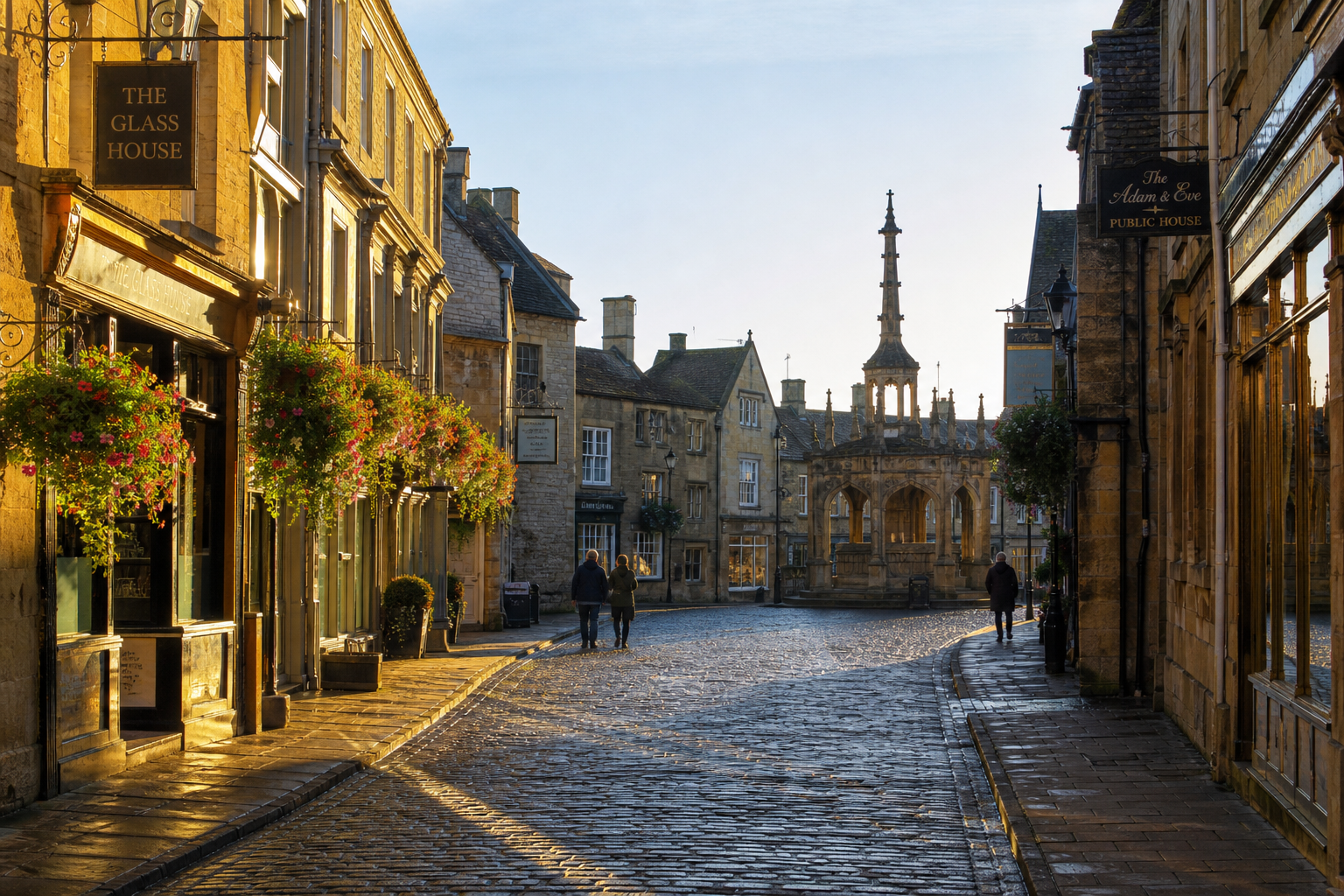
Let me be clear that I'm not going to pretend these places are completely unknown – they aren't. But they appear far less frequently in mainstream travel coverage than they deserve, and they consistently offer a better weekend experience than some of the more obvious choices, particularly if you value the feeling of arriving somewhere that isn't already heaving with people who are also there because it appeared on every top-ten list.
Ludlow, Shropshire
I've been going to Ludlow for about eight years and I'm still surprised that more people haven't caught on. It's one of the best-preserved medieval market towns in England, with a genuinely impressive castle, good independent restaurants (the town has a reputation for food that's well-deserved), a pleasant river walk along the Teme, and an air of not trying too hard that I find extremely restoring.
The castle is worth the admission fee on a clear day. The Ludlow Food Festival in September fills it up considerably but is worth planning around if you like that sort of thing. Stay at one of the independent B&Bs on Broad Street rather than the hotel options if you can – they're better value and more characterful.
Getting there: about 2.5 hours from London by train via Hereford, or an easy drive from Birmingham or Manchester. The train service is slower than it should be but the journey through the Marches is genuinely beautiful.
Whitby, North Yorkshire (in the off-season)
Whitby is not unknown. In summer it's quite busy. But Whitby in October or November – grey skies over the harbour, nearly empty streets, fish and chips eaten in the wind – is one of my favourite things in England. The abbey ruins above the town look better in dramatic weather than they do in sunshine. The independent shops and coffee places are properly open and not too rushed.
The coastal walk from Whitby south towards Robin Hood's Bay is one of the best short coastal walks I know. It's about 6 miles one way along the Cleveland Way and spectacularly beautiful when the sea is up. Taxis back are easy and inexpensive.
Don't stay in the tourist centre; there are better value options in the surrounding area and you only need to be five minutes from the harbour to still have a great base.
Portmeirion and the Llyn Peninsula, Wales
Portmeirion – the extraordinary Italianate village on the Dwyryd Estuary designed by Clough Williams-Ellis – is not exactly a secret, but the surrounding area is significantly undervisited by people who aren't Welsh. The Llyn Peninsula is an Area of Outstanding Natural Beauty that feels remote in a way that's increasingly rare in the UK.
The beaches around Abersoch and Aberdaron are genuinely excellent. Bardsey Island (Ynys Enlli) at the tip of the peninsula can be reached by boat from Aberdaron in reasonable weather and has an extraordinary sense of stillness. The cafe at the end of the world, as it sometimes gets called, is fine; the silence and the view are the point.
Hexham and the South Tyne Valley, Northumberland
Most visitors to Northumberland go for the coast (spectacular but well-known) or Alnwick (the castle, the garden). Hexham gets overlooked. It shouldn't.
Hexham has one of the finest medieval churches in the north – Hexham Abbey, with its Anglo-Saxon crypt intact from the 7th century, which is extraordinary – a good independent food scene, and serves as an excellent base for Hadrian's Wall. The Wall is manageable in a weekend: the most dramatic central section around Housesteads and Steel Rigg is under an hour's drive from the town, and the walking is spectacular.
Practical note: Hexham gets busier in summer. If you want Hadrian's Wall to yourself, come in early spring or late autumn. The Wall has been there 2,000 years; it looks good in grey weather.
Hay-on-Wye, Powys
The town of books. If you like secondhand books at all, Hay-on-Wye is an actual pilgrimage destination – there are something like 25 bookshops in a tiny town on the Welsh Marches. The surrounding countryside, in the Brecon Beacons, is beautiful and walking is excellent.
Come outside the literary festival period (late May, early June) if you want to move around easily. The rest of the year Hay is pleasantly quiet, and the bookshops are no less rewarding for the lack of a festival atmosphere around them.
A Few Notes on Timing and Booking
All of these places have a tourism infrastructure but it's smaller than the main destinations. Booking accommodation earlier is more important than in well-visited cities. Driving gives you more flexibility than public transport in most cases, though the train to Whitby via Scarborough is a pleasure in itself.
None of these places is cheap in the way that "budget travel" implies – good accommodation in British market towns isn't dramatically different in price from the more famous alternatives. But the ratio of quality to cost tends to be better, and you get the considerable pleasure of arriving somewhere that doesn't feel like a theme park version of itself.